
Written by Tocntravel Editorial Team
Reviewed by China Travel Specialists
Last updated: April 2026
China is home to some of the most spectacular scenery in Asia, and these top 10 natural wonders in China represent the country’s most beautiful natural landscapes, from high-altitude lakes and granite peaks to river valleys, alpine basins, and multicolored sandstone formations.
This guide explores some of the most remarkable China natural wonders, selected not simply for fame, but for geological significance, ecological value, visual distinctiveness, and travel relevance. Rather than ranking destinations by popularity alone, this list focuses on the landscapes that best represent the scale, diversity, and natural identity of China.
How We Selected These Natural Wonders
This ranking is based on five core criteria:
- Scenic distinctiveness
- Geological significance
- Ecological value
- Cultural and landscape influence
- Travel experience and accessibility
Rather than ranking the most visited attractions, this guide focuses on the best natural wonders in China based on scenic distinction, geological importance, and overall travel experience.
Some iconic landscapes, including Changbai Mountain and Kanas, are equally remarkable alternatives in broader discussions of China natural wonders. This list prioritizes geographic balance, landform diversity, and overall travel relevance across China.
1. Yarlung Tsangpo Grand Canyon, Tibet
The Yarlung Tsangpo Grand Canyon is one of the most dramatic and least disturbed landscapes in China. Located in southeastern Tibet, this immense canyon was carved by the Yarlung Tsangpo River as it curves around Namcha Barwa, creating one of the deepest canyon systems in the world.
What makes this region exceptional is its extreme vertical diversity. Snow-covered peaks, glacier-fed rivers, dense forests, waterfalls, and subtropical vegetation coexist within a single mountain corridor, forming one of the most complex alpine ecosystems in Asia.


For experienced travelers, Tibet offers some of the most remote and rewarding landscape journeys in China.
2. Huangshan (Yellow Mountain), Anhui
Huangshan is China’s most iconic mountain landscape and one of the country’s most influential natural landmarks in Chinese visual culture. Known for its granite peaks, twisted pine trees, sea of clouds, and winter snow, Huangshan has defined the classical image of Chinese mountain scenery for centuries.
Its beauty lies in contrast—sharp granite summits rise through shifting mist while ancient pines cling to exposed cliffs, creating the timeless mountain silhouettes seen in traditional Chinese ink painting.
For travelers interested in mountain travel in China, Huangshan remains one of the country’s most rewarding classic routes.
3. Qinghai Lake, Qinghai
Qinghai Lake is the largest inland lake in China and one of the most expansive natural landscapes on the Tibetan Plateau. Surrounded by open grasslands, distant snow mountains, and vast skies, it offers a sense of scale and stillness rare in East Asia.
Its scenery changes dramatically with the seasons. Summer brings sweeping rapeseed blooms along the shoreline, while winter transforms the lake into a stark and crystalline highland landscape.
For travelers drawn to high-altitude scenery and open plateau landscapes, Qinghai remains one of western China’s most distinctive natural regions.
4. Zhangjiajie (Wulingyuan), Hunan
Zhangjiajie is one of the most visually distinctive landscapes in China and among the country’s most extraordinary natural formations. Its thousands of vertical quartz sandstone pillars rise abruptly from forested ravines, forming one of the most unusual mountain systems on Earth.
Often associated with the floating mountains of Avatar, Zhangjiajie is internationally recognized for its surreal appearance. Yet its significance is not only visual. These towering sandstone pillars represent a rare geological formation with few parallels worldwide.
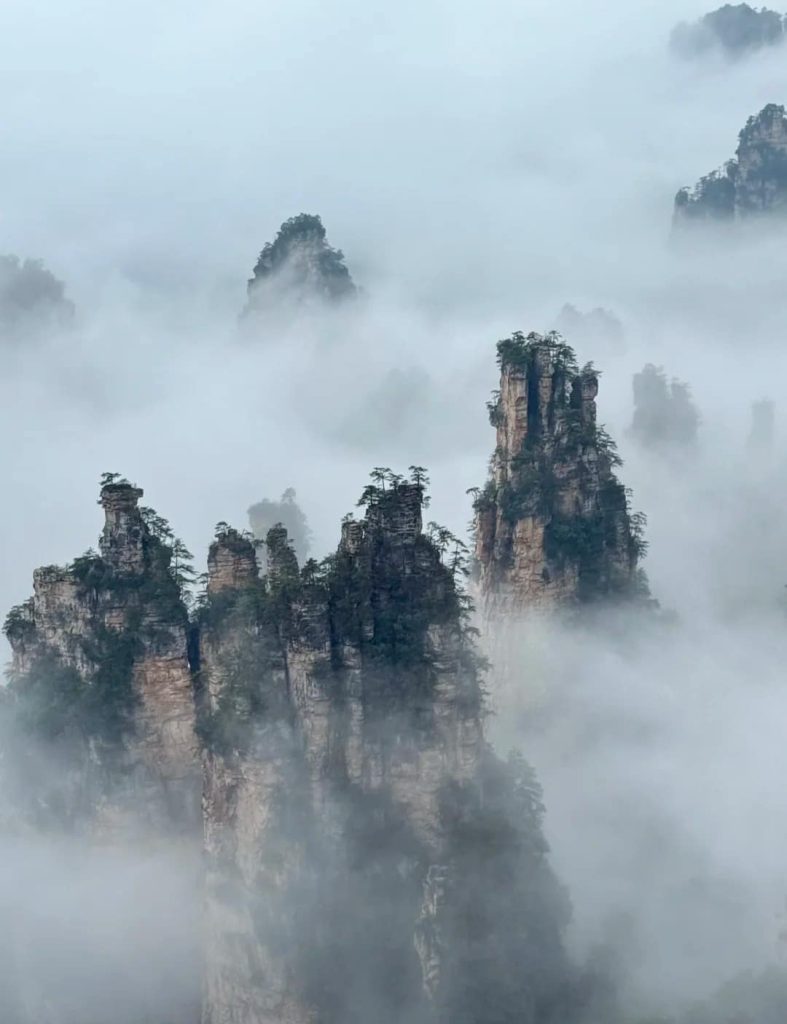
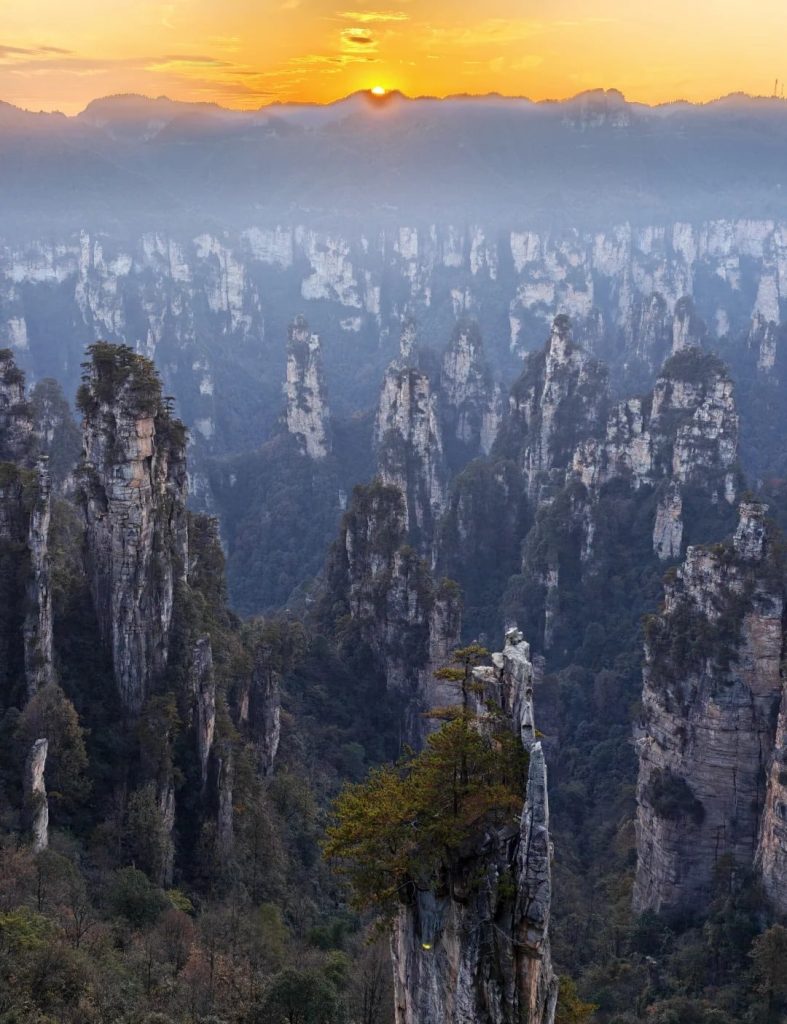
Zhangjiajie is especially rewarding for travelers interested in nature-focused itineraries in central China.
5. Li River, Guilin
The Li River in Guilin is one of the most famous and visually refined landscapes in China. Flowing between Guilin and Yangshuo, it is defined by limestone karst peaks rising directly from the riverbanks, forming one of the most recognizable natural scenes in Chinese landscape imagery.
Unlike China’s more dramatic mountain systems, Guilin’s beauty is quieter and more balanced. Misty peaks, calm water, bamboo groves, and rural river scenery combine to create one of the most elegant landscapes in the country.
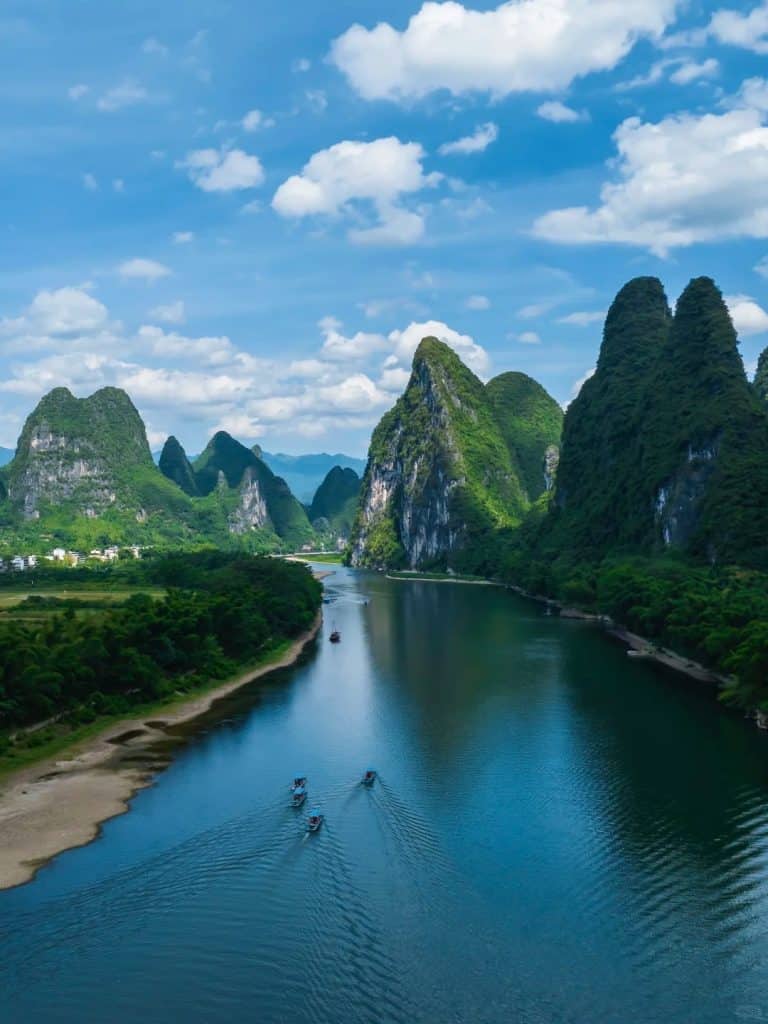

Guilin is often included in slower-paced southern China routes focused on scenery, light hiking, and river travel.
6. Stone Forest, Yunnan
The Stone Forest in Yunnan is one of the world’s most unusual karst landscapes. Instead of rounded limestone hills or underground cave systems, the rock here rises vertically in dense stone formations, creating an immense natural maze of limestone pillars.
The result is a landscape that feels both geological and surreal—narrow stone passages, jagged towers, and weathered rock corridors form one of China’s most visually distinctive natural environments.
It remains one of the country’s most fascinating examples of karst evolution.
7. Yangtze Three Gorges
The Yangtze Three Gorges form one of China’s grandest river landscapes. Stretching between Chongqing and Yichang, this section of the Yangtze is defined by steep cliffs, narrow river passages, layered mountain ridges, and dramatic shifts in scale.
Each gorge has a distinct character: Qutang is steep and forceful, Wu is elegant and mist-covered, and Xiling is rugged and expansive.
Beyond scenic value, the Three Gorges also hold exceptional historical and cultural significance, making them one of China’s most layered natural landscapes.
8. Zhangye Danxia, Gansu
Zhangye Danxia is one of the most visually striking geological landscapes in China. Located in Gansu Province, this extraordinary landform is known for its multicolored sandstone ridges, layered mineral bands, and vividly striped hills formed over millions of years.
Unlike the classic red escarpments of southern Danxia landscapes, Zhangye is defined by broad, undulating formations painted in deep red, orange, yellow, and ochre. Its unusual color patterns and sweeping scale make it one of the most recognizable geological wonders in China.


For travelers interested in dramatic landforms and desert-edge scenery, Zhangye Danxia is one of the most distinctive landscapes in northwestern China.
9. Hukou Waterfall, Yellow River
Hukou Waterfall is the most powerful waterfall in China and the most dramatic expression of the Yellow River’s force. Here, the broad river narrows abruptly before plunging into a deep stone basin, producing violent currents, heavy spray, and thunderous sound.
Unlike more delicate waterfall landscapes, Hukou is defined by raw force rather than elegance.
It is one of the clearest expressions of China’s geological power and one of the most physically dramatic natural spectacles in the country.
10. Jiuzhaigou Valley, Sichuan
Jiuzhaigou Valley is one of the most celebrated natural landscapes in China and one of the country’s most visually extraordinary alpine environments. Known for its turquoise lakes, multi-tiered waterfalls, forested valleys, and mineral-rich travertine pools, Jiuzhaigou is among the most distinctive highland landscapes in Asia.
Its scenery is defined by color, clarity, and contrast. Snow-fed water flows through blue and green lakes, dense mountain forests, and terraced limestone formations, creating one of the most photogenic natural landscapes in China.
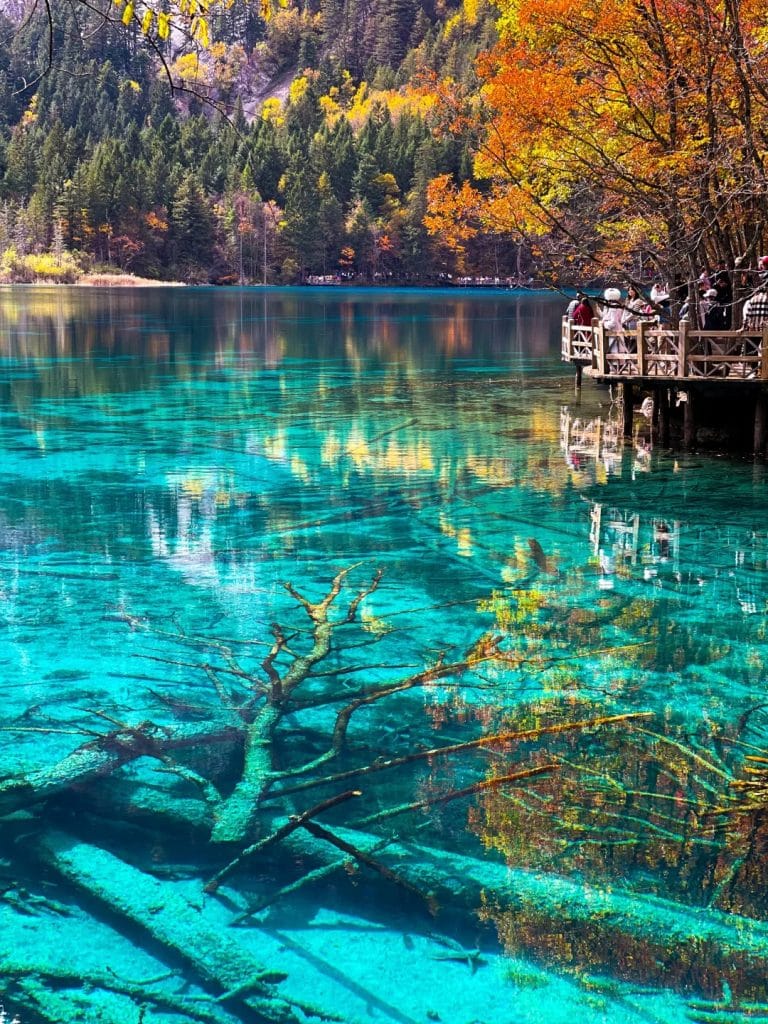

For travelers seeking alpine scenery, vivid color, and one of the country’s most iconic UNESCO-listed landscapes, Jiuzhaigou remains one of China’s most exceptional natural wonders. It is also one of the most rewarding additions to longer scenic China journeys combining Jiuzhaigou and Zhangjiajie.
Why These Are China’s Most Extraordinary Natural Landscapes
China’s natural beauty is defined not by a single iconic landscape, but by extraordinary contrast.
Few countries contain such a broad concentration of landforms within one national geography: granite peaks, karst rivers, multicolored sandstone hills, alpine lakes, glacial canyons, and highland valleys all exist within the same geographic system.
These ten natural wonders represent the most visually exceptional, geographically representative, and travel-worthy landscapes in China.
Together, they offer the clearest introduction to the scale and diversity of China’s natural world.
Planning a Nature-Focused Trip in China
For travelers planning a nature-focused route, destinations such as Guilin, Huangshan, Zhangjiajie, and Tibet can be combined into private journeys based on season, pace, and landscape preference.
Whether you are looking for mountain scenery, river landscapes, alpine wilderness, or geological wonders, China offers some of the best natural places to visit in the world.

