Home
China Tours
Tibet
The Potala Palace above Lhasa. Pilgrims circling the Jokhang. A high road opening onto a turquoise lake. Tibet brings together remarkable places, but the connections between them deserve just as much thought. A private journey gives you room to explore Tibetan culture with a guide, linger over a view and choose a route that reflects your interests. Begin with time to settle in, then look beyond the city to the monasteries, lakes and Himalayan landscapes that matter most to you.
PLANNING TIBET THE RIGHT WAY
Chris
Senior China Trip Planner, TOCNTRAVEL
Use these itineraries as a starting point for your own journey. A stay in Lhasa, a route through central Tibet and a longer expedition toward Everest or Ngari offer very different experiences. Compare the daily activities, driving time and overnight stops, then discuss what suits your interests, available time and travel needs.
Combine the plateau with another side of China: imperial history, regional food or a contemporary city stay. These journeys bring Tibet into a wider itinerary, with connections and time on the plateau planned as part of the whole trip.
Tibet is a region of striking contrasts. Lhasa brings palace architecture and monastery life into close focus; beyond the city, lake basins, mountain passes and open grasslands reveal the scale of the plateau. Farther east, the valleys around Nyingchi are greener and more wooded, while Ngari in the west offers vast distances, sacred landscapes and the ruins of Guge.
Much of the region lies at high altitude, and a thoughtful itinerary accounts for more than the distance between sights. Consider the season, road conditions, permits, overnight elevations and the time available for each stage. Lhasa, Yamdrok Lake and Shigatse form one familiar cultural route; Everest and more remote areas need additional planning. Tibet can be the focus of a trip or part of a longer China journey, without a fixed rule about whether it comes first or last.
Tibet rewards attention to detail: the workmanship inside a monastery, the movement of pilgrims around a sacred site, the changing color of a lake beneath passing clouds. Its appeal lies in the relationship between landscape and living culture, not simply in a collection of landmarks.
Travel with time for explanation and observation. A guide can help place architecture, religious practice and local customs in context, while a considered route leaves space between the major visits. Sacred places are first and foremost places of worship; thoughtful travel respects that distinction.
Walk alongside pilgrims, linger over Tibetan tea, and watch the light change across the plateau. Experience Tibet through its living traditions and quieter moments, not just its famous landmarks.
Heritage
Explore Lhasa through its monasteries, historic streets and palace architecture. A guided visit gives context to the art and religious traditions, while unhurried time in the old town reveals the everyday life around these important sites.
Sacred Lakes
Yamdrok, Namtso and Manasarovar each offer a different encounter with Tibet’s sacred waters. Their settings range from winding turquoise shorelines to open high-altitude horizons. Choose a lake that fits your route and season, with time to appreciate its landscape and cultural significance.
The Himalayas
Travel toward Tibet’s side of Everest for a landscape of broad valleys, high passes and Himalayan peaks. The mountain is the focus, but the journey through this exposed terrain is part of the experience. Build in flexibility for weather, access and your response to altitude.
Plateau Landscapes
Open grasslands, scattered lakes and distant snow ranges give Tibet’s plateau its extraordinary sense of scale. These landscapes invite a slower kind of observation: a change in the light, a grazing herd or the long curve of a road across the plain.
Living Traditions
Pilgrimage circuits and neighborhood streets offer a close view of Tibetan daily life. Observe respectfully, leave worshippers space and ask before photographing people. A local guide can explain the customs you encounter without turning a personal act of devotion into a spectacle.
Overland Journeys
Tibet’s roads connect monastery towns, lake basins and mountain valleys across considerable distances. A well-paced overland journey allows for scenic stops as well as the practical demands of the road. Plan each day around actual conditions rather than mileage alone.
Valleys & Borderlands
The wooded valleys of eastern Tibet and the dry, eroded landscapes of the far west reveal very different sides of the region. Remoteness also brings practical considerations: route permissions, accommodation and road access should shape which places belong in your journey.
Changing Light
Low light can bring remarkable color and texture to Tibet’s mountains, rivers and open plains. Leave room in the itinerary for photography when conditions allow, rather than promising a particular view. Warm layers and a flexible schedule matter as much as the location.
From Lhasa’s historic heart to the lakes and mountain passes of the wider plateau, discover what makes each stop distinctive—and which places you’d like to build your journey around.
At the heart of Lhasa’s old town, Jokhang Temple is a major center of Tibetan Buddhist pilgrimage. Its religious significance is most apparent in the devotion of the people who come here. Visit with a guide for context, and allow worship and local instructions to set the pace.
The Barkhor circuit surrounds Jokhang Temple, bringing pilgrimage and everyday commerce into the same streets. Old buildings, small shops and the movement of worshippers make this a rewarding place to explore slowly. A guided walk adds context; time to observe gives the neighborhood its own voice.
Spread across a hillside outside central Lhasa, Drepung is an important center of Tibetan Buddhist learning. Its halls and courtyards invite a closer look at monastic architecture and scholarly tradition. The scale of the complex becomes more meaningful with a guide who can connect individual details to its history.
The Potala Palace rises above Lhasa in a striking composition of white walls and red upper buildings. Once the winter residence of the Dalai Lamas, it brings together Tibetan religious, artistic and political history. Plan the visit around the current admission arrangements and allow for the climb and stairs.
Sera Monastery is particularly associated with Buddhist debate, where ideas are examined through lively exchanges and expressive gestures. When visitor access and the monastery’s schedule allow, observing a debate adds another dimension to a guided visit. Confirm arrangements rather than assuming an event will take place every day.
Yamdrok Lake’s winding shoreline and turquoise water make it a memorable part of a journey through southern Tibet. Revered as one of the region’s sacred lakes, it is both a cultural landscape and a scenic stop. Approach viewpoints thoughtfully: the route includes high passes, and conditions can change quickly.
Namtso is a high-altitude saltwater lake, more than 4,700 meters above sea level. Its open shore and distant snow peaks create a very different setting from Lhasa. The visit deserves careful timing, suitable clothing and an itinerary that takes both altitude and current access conditions into account.
Near Mount Kailash in western Tibet, Lake Manasarovar holds deep significance for Buddhist, Hindu and Bon pilgrims. Its setting combines open water, high mountains and the expansive landscapes of Ngari. Include it as part of a properly planned western Tibet journey, with respect for the people who come here to worship.
Seen from Tibet, Everest presents its northern side above a stark Himalayan landscape. Clear conditions can reveal an extraordinary mountain panorama, but visibility is never assured. A visit to the Everest region calls for realistic expectations, additional time and careful attention to altitude and access rules.
Rongbuk Monastery stands in the high valley on the Tibetan approach to Everest. Its modest buildings offer a striking contrast with the scale of the surrounding mountains, bringing religious history into a landscape often approached only for its views. It is a place to observe respectfully and without haste.
Gyatso La is a high mountain pass on the journey toward Tingri and the Everest region. Open slopes and distant ranges mark a change in the landscape as the road approaches the Himalayas. When conditions allow, the crossing offers a memorable sense of the terrain beyond central Tibet.
The Qiangtang Plateau opens onto broad grasslands, lakes and far-reaching mountain views in northern Tibet. Here, the landscape itself is the reason to travel: the spacing of settlements, the movement of grazing animals and the long sweep of the horizon. It offers a powerful contrast to Lhasa’s architectural detail.
The grasslands around Nagqu bring a pastoral dimension to a Tibet journey. Summer can add fresh green color to the plains, with herds grazing beneath an immense sky. Take time to observe the landscape, while respecting herders, private spaces and the practical realities of rural life.
Ngari, also known as Ali, is the far-western region of Tibet associated with Mount Kailash, Manasarovar and the ruins of Guge. Wide basins and dry mountain landscapes give it a character distinct from central Tibet. Distances are substantial, so the journey needs generous time and careful logistical planning.
Basum Tso lies among the wooded mountains of eastern Tibet. Green-blue water, forested shores and the contours of the surrounding peaks give it a distinct character among the region’s lakes. In a Nyingchi-area journey, it offers time to appreciate the greener, more intimate landscapes of the east.
The Yarlung Tsangpo Grand Canyon brings together a powerful river, steep mountain slopes and the dramatic relief of the eastern Himalayas. Its depth is difficult to grasp from a single viewpoint. A visit to the accessible scenic areas reveals something of that scale, with mountain visibility shaped by the weather.
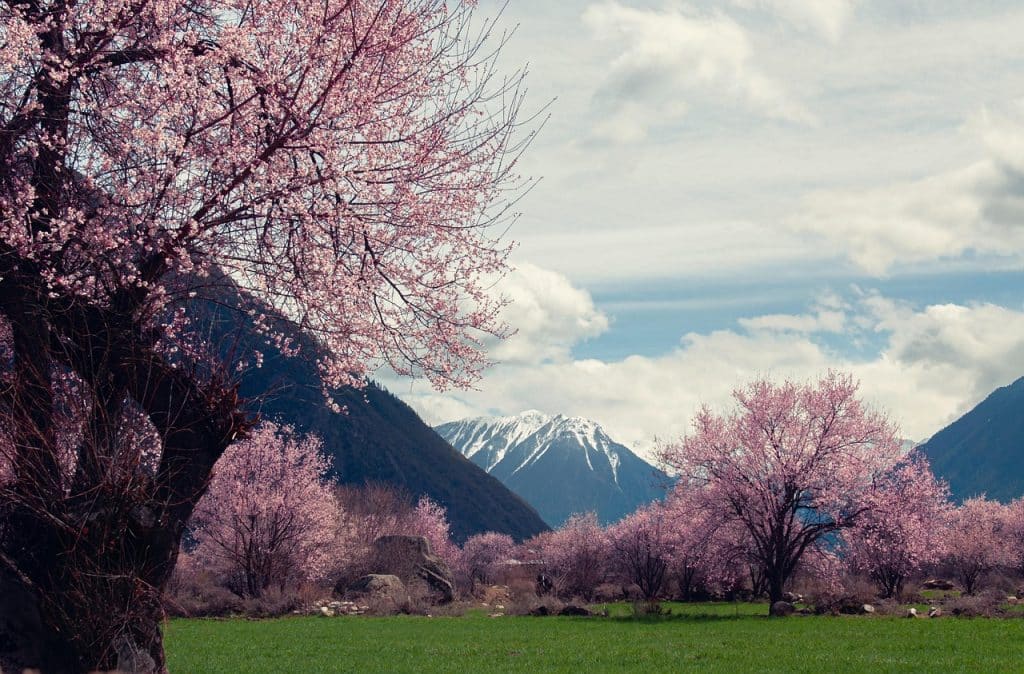
Nyingchi introduces a greener side of Tibet, with wooded slopes, river valleys and mountain scenery. Spring peach blossoms are a particular draw, though the timing varies by valley and weather. The region can be explored for its landscapes beyond the flowering season as well.
Zanda’s earth forest is a landscape of deeply eroded ridges, gullies and tower-like formations in western Tibet. Changing light brings out the layers and textures of the terrain. Consider it alongside Guge as part of a longer Ngari route, rather than as a short addition to a Lhasa stay.
The ruins of the Guge Kingdom rise above the dry valleys near Zanda, preserving traces of a former center of power and Buddhist culture. Architecture and landscape are closely intertwined here. A guided visit helps connect the surviving structures and artwork with the history of western Tibet.

Begin with what interests you: religious art, landscape photography, time in Lhasa or a wider plateau journey. Build the route around those priorities, with realistic driving days and room for rest.
Guiding brings context to the monasteries, architecture and customs along your route. Leave time for questions and observation, and let local rules and the needs of worshippers guide each visit.
Private travel allows a more personal pace within the approved itinerary. Discuss preferred visiting times, walking demands and breaks in advance, while allowing for admission schedules and busy periods.
Discuss permit arrangements, guiding, vehicles, hotels and route connections before confirming the journey. Clear expectations about inclusions, accommodation and contingency plans are part of a well-prepared private trip.
The right season depends on the Tibet you want to see. Lhasa’s cultural sites, Nyingchi’s blossom-filled valleys and the exposed routes toward Everest or Ngari have different considerations. Use the seasons below to narrow your choices, then check conditions for the actual places and activities on your itinerary.
March to May brings a gradual change across the plateau, but conditions are far from uniform. In eastern Tibet, peach blossoms around Nyingchi and Bomi can create a beautiful contrast with mountain scenery. Flowering dates vary between locations and from year to year.
Lhasa can combine well with a carefully timed eastern Tibet visit. Higher lakes and passes may remain cold or icy, particularly early in the season; do not assume that a spring departure means every road or viewpoint is accessible.
For photography or gentle walks, choose the places first and match the dates to their conditions. Spring is an attractive option, not a guarantee of mild weather across Tibet.
June to August brings greener grasslands and valleys, with a different palette from the drier months. It is also a season to consider Tibetan festival traditions, including Lhasa’s Shoton Festival and horse-racing events around Nagqu. Confirm the dates and visitor arrangements for your travel year.
Summer overlaps with the rainy season. Rain, landslides and changing road conditions can affect journeys, especially in mountain valleys; a bright morning does not guarantee an uninterrupted travel day.
Allow flexibility in the route and reserve accommodation ahead where demand is high. A private itinerary still needs to work within weather, road and site conditions.
September to November can offer rewarding mountain scenery and autumn color, particularly in the valleys of eastern Tibet. As the season progresses, conditions become colder, and the experience of a September trip can differ considerably from a November departure.
For Everest or Namjagbarwa, allow more than one opportunity to enjoy the landscape if the route permits. Clear views and golden light are possibilities to plan for, not outcomes to promise.
Match high-altitude excursions to the departure date and current access conditions. Autumn does not remove seasonal constraints, and the National Day holiday period can bring additional demand.
December to February can suit a more focused cultural stay, particularly for travelers comfortable with cold weather and a less expansive route. Lhasa’s monasteries, old streets and local food provide reasons to visit beyond the mountain views.
Snow or lake ice may add interest to selected landscapes, but conditions vary and visitor access must be checked. Tibetan New Year follows the Tibetan calendar, so confirm its dates rather than assuming it falls within the same winter months each year.
Prioritize suitable accommodation, warm layers and flexible days. Discuss any longer outdoor excursion or hot-spring visit in advance, rather than treating winter as a season for unrestricted plateau travel.
Before confirming your dates, check the route rather than the season alone. Lake access, high passes, road works and temporary restrictions can change. Keep a little room in the schedule so that an adjustment need not define the whole journey.
Occasional planning notes for private China trips, with route ideas, seasonal advice and practical on-the-ground tips.
Start with the places you most want to experience, then allow enough time for the journey between them. Overnight stops, walking demands, road conditions and time to adjust all belong in the plan. The aim is a rewarding itinerary you can follow comfortably, with a clear understanding that individual responses to altitude vary.
For a cultural introduction with fewer changes of base.
A stay centered on Lhasa keeps the focus on palace architecture, monasteries and the old town. It can suit travelers who prefer more time in one place rather than a sequence of long drives. Plan light activities on arrival and avoid filling every available hour.
Lhasa is already at high altitude, around 3,650 meters. Staying in one city does not make the trip risk-free or guarantee acclimatization. Discuss your arrival method and any health concerns before travel, and keep later visits adjustable if you do not feel well.
For a wider introduction to central Tibet’s culture and landscapes.
A route from Lhasa through Yamdrok Lake, Gyantse and Shigatse connects lake scenery with monastery towns and historic sites. It offers a varied journey for travelers who have enough time beyond a city stay.
The road via Yamdrok crosses high mountain passes, so this is not a simple sequence of gently increasing elevations. Review both the day’s highest points and overnight stops, and allow time before venturing higher. The route should follow your response to altitude and current conditions, not a promise that a familiar itinerary is safe for everyone.
Choose the region first: these are different journeys, not interchangeable extensions.
Everest and Ngari bring more exposed terrain, substantial distances and greater logistical demands. Discuss the overnight elevations, available facilities and any walking or trekking involved before choosing a route. A previous high-altitude trip is useful background, not a substitute for preparation on this one.
Eastern Tibet offers another direction, with wooded valleys and places at lower elevations than parts of central and western Tibet. Some routes still cross high passes or reach remote areas. Plan Nyingchi and its surroundings on their own merits rather than grouping every eastern journey with an Everest or Ngari expedition.
Allow enough days for the route, including time to rest and adjust.
Review overnight elevations as well as the highest points reached during the day.
Keep driving and walking expectations realistic, with flexibility for road and weather changes.
Agree on guiding, accommodation, permit arrangements and contingency plans before departure.
A private Tibet itinerary works best when your interests and practical needs are considered together. Fewer changes of base or an extra night can sometimes add more to the experience than another distant stop. Thoughtful planning supports the journey; it does not eliminate altitude-related risk.
Foreign leisure travelers visiting the Tibet Autonomous Region need advance permit arrangements through a qualified travel agency. Confirm the requirements for your nationality, entry route and approved itinerary before committing to travel. A private tour is an organized journey, not permission to explore independently without the required arrangements.
A slower morning or an unplanned pause need not feel like a missed opportunity. Allow room between major visits for meals, rest and simply observing the place around you. Do not keep a demanding schedule at the expense of how you feel.
Tell your guide promptly if you feel unwell. Do not dismiss headache or unusual fatigue as something to push through, and do not continue to a higher altitude with symptoms. See the altitude FAQ below for warning signs that require urgent medical help.
If you arrive in Lhasa, avoid treating the first day as a full sightseeing day. Build in a quiet start and review plans before traveling farther. For another entry route, discuss the first overnight stops separately; there is no single arrival sequence that suits every traveler.
A short line on a map can include winding roads, high passes and several stops. Ask for realistic driving estimates based on the actual route, with room for road works, checks and weather. The overnight destination should remain practical even when the day runs more slowly than expected.
Bring layers, sun protection and comfortable footwear suited to the activities you have chosen. Lakes, passes and exposed viewpoints can feel very different from the city. Check the forecast, but keep clothing and daily plans flexible enough for conditions to change.
Tibet can be a dedicated journey or one chapter of a longer visit to China. The best place for it in your itinerary depends on your international arrival, available connections, permit arrangements and the route you want to follow on the plateau. It does not have to come last.
Beijing and Xi’an may appeal for imperial history, while Chengdu offers a different food and cultural setting. These are possible complements to Tibet, not compulsory stops before entry. Staying in a lower-altitude city does not itself acclimatize you to the plateau.
Use the map to orient yourself, then plan the actual connections separately. A flight, train or road option must suit your travel dates and entry requirements; geographical proximity alone is not enough.
Leave room for the Tibet portion to stand on its own. A focused stay with time for the places you value will usually feel more personal than adding distant stops simply because they appear on the same map.
Choose the next stage for the contrast it offers and the connection it requires. You may want a lower-altitude city stay, a few days of regional food and culture, or simply a comfortable route home. Leave sufficient time between your final Tibet travel day and any important onward departure.
Chengdu for food and a different pace. Consider a stay built around Sichuan cooking, teahouses and city neighborhoods. Panda visits can be discussed as part of the wider plan, with the actual connection from Tibet checked for your dates.
Xi’an or Beijing for another layer of history. Either city can complement Tibet’s religious and cultural sites with imperial architecture and major historical collections. Choose according to your interests and the practical direction of the journey, not an assumed direct connection.
Shanghai for a contemporary city finish. A waterfront walk, neighborhood exploration and time for dining offer a contrast to the plateau. Allow space for any transfer required between Tibet and the city.
Or finish the journey in Tibet. You do not need another destination to make the itinerary complete. Plan the return through a suitable gateway, confirm current transport arrangements and avoid a tight, unprotected connection after a remote overland stage.
No. Tibet can come earlier or later in a wider China itinerary, or be the main focus of your trip. The order should reflect your entry route, confirmed transport and permit arrangements. Visiting another city first is not, by itself, a condition of permit compliance.
Plan the Tibet portion in advance, whichever order you choose. Allow time on the plateau rather than assuming that earlier sightseeing elsewhere has prepared you for altitude.
Foreign leisure travelers need a Tibet Travel Permit for the Tibet Autonomous Region, arranged through a qualified travel agency. Confirm the documents and arrangements that apply to your nationality and planned route; additional permissions may be needed for certain areas.
Agree on the itinerary before applying and do not assume a permit is guaranteed. Requirements and access can change. Read the official Tibet travel guidance, alongside the entry advice applicable to your own passport.
Do not change the approved route independently. Tell the organizing agency what you would like to adjust so it can check whether the change is possible and whether revised permission is needed.
Changes caused by weather, health or road conditions also need to be coordinated. A private itinerary offers personal planning, but it remains subject to permits, access rules and practical conditions.
It can be possible to enter via Nepal; the Kathmandu–Lhasa international air route is an example. This does not mean that every traveler can simply book a flight or cross a border without prior arrangements.
Ask the organizing agency to confirm the applicable Chinese entry documents, Tibet permissions and current transport or border status for your dates. Requirements for a Nepal entry may differ from an arrival through another Chinese city.
No. Meeting China’s general entry requirements does not replace the separate arrangements required for travel in the Tibet Autonomous Region. Check both the entry rules for your passport and the Tibet permit requirements for your itinerary.
Where a visa exemption or another entry arrangement applies, have the agency confirm how it affects the documentation needed for your trip rather than assuming it removes the Tibet permit requirement.
It depends on the itinerary. A cultural stay in Lhasa can involve stairs and uneven ground, while a longer plateau route may add lengthy drives and more demanding walks. A journey that includes trekking needs a separate assessment of distance, terrain and elevation.
Discuss your usual activity level, mobility and preferences before choosing a route. Fitness does not protect against altitude illness, and a low-walking itinerary still requires attention to altitude.
Age alone does not decide whether a Tibet journey is suitable. Health, mobility, the arrival route and the planned activities all matter. Allow time to discuss practical needs such as stairs, walking distances and long drives.
Travelers with relevant medical conditions should seek advice from a clinician familiar with high-altitude travel before committing. A personalized schedule can address preferences; it cannot replace an individual medical assessment.
Ascend gradually where possible and allow time to acclimatize. Plan overnight elevations carefully, keep initial activity light and avoid alcohol during the first days at altitude. Feeling fit is not a reason to rush.
If you develop symptoms, tell your guide and do not go higher while unwell. Worsening symptoms need prompt assessment. Breathlessness at rest, confusion or difficulty walking steadily require urgent medical help and descent when feasible; do not wait for rest alone to resolve them.
This is general travel information, not personal medical advice. Review the NHS altitude sickness guidance and CDC high-altitude travel advice when preparing with a qualified clinician.
Bring the required travel documents, suitable layers, sun protection and footwear matched to your activities. Carry any personal medication you need and discuss health concerns before departure. Keep the practical details of your journey accessible, including your guide or agency contacts.
Check that your travel insurance covers the destination, planned altitude and activities, and any evacuation you may need. Confirm what is included in the trip and allow flexibility around remote travel days and onward connections.
Treat monasteries and pilgrimage sites as living religious places. Dress modestly, keep voices low and follow the site’s instructions and your guide’s advice. Ask before photographing people, and check whether photography is allowed inside a religious building.
Give worshippers space and avoid interrupting rituals for a photograph. Where customs are unfamiliar, a respectful question is more useful than an assumption.
Tell us what draws you to Tibet, how you like to travel and the time you have available. We can discuss a private journey focused on the plateau or place it within a wider China itinerary, with your interests and practical needs at the center of the plan.
Claire
Senior Travel Advisor
Hi, I’m Claire. Planning a private trip to China? Share your travel dates and ideas, and I’ll help you get started.